Query performance
0x
Versus the system it replaced
Loading project...
Sole Architect & Developer
Solo — design, implementation, testing, deployment, documentation
24 months
50 days of core implementation, within a 2-year architecture role
A cloud-native product master data platform for a flagship door product line: 999 product specifications × 58 attributes, unified across 51 BigQuery tables and serving 4 global factories. Designed, implemented, tested, and documented by one person — with queries 430x faster than the system it replaced.
Product master data for 999 specifications × 58 attributes lived across scattered spreadsheets, desktop databases, and an aging PLM system. Answering a basic question — 'which products use this part?' — meant opening multiple files and reconciling them by hand. The division needed a single source of truth that four global factories could rely on, with the change history and integrity guarantees that regulated manufacturing demands. Prior attempts had stalled on vendor dependence and unclear requirements — so this time, the prototype had to be built in-house, fast, and to production quality.
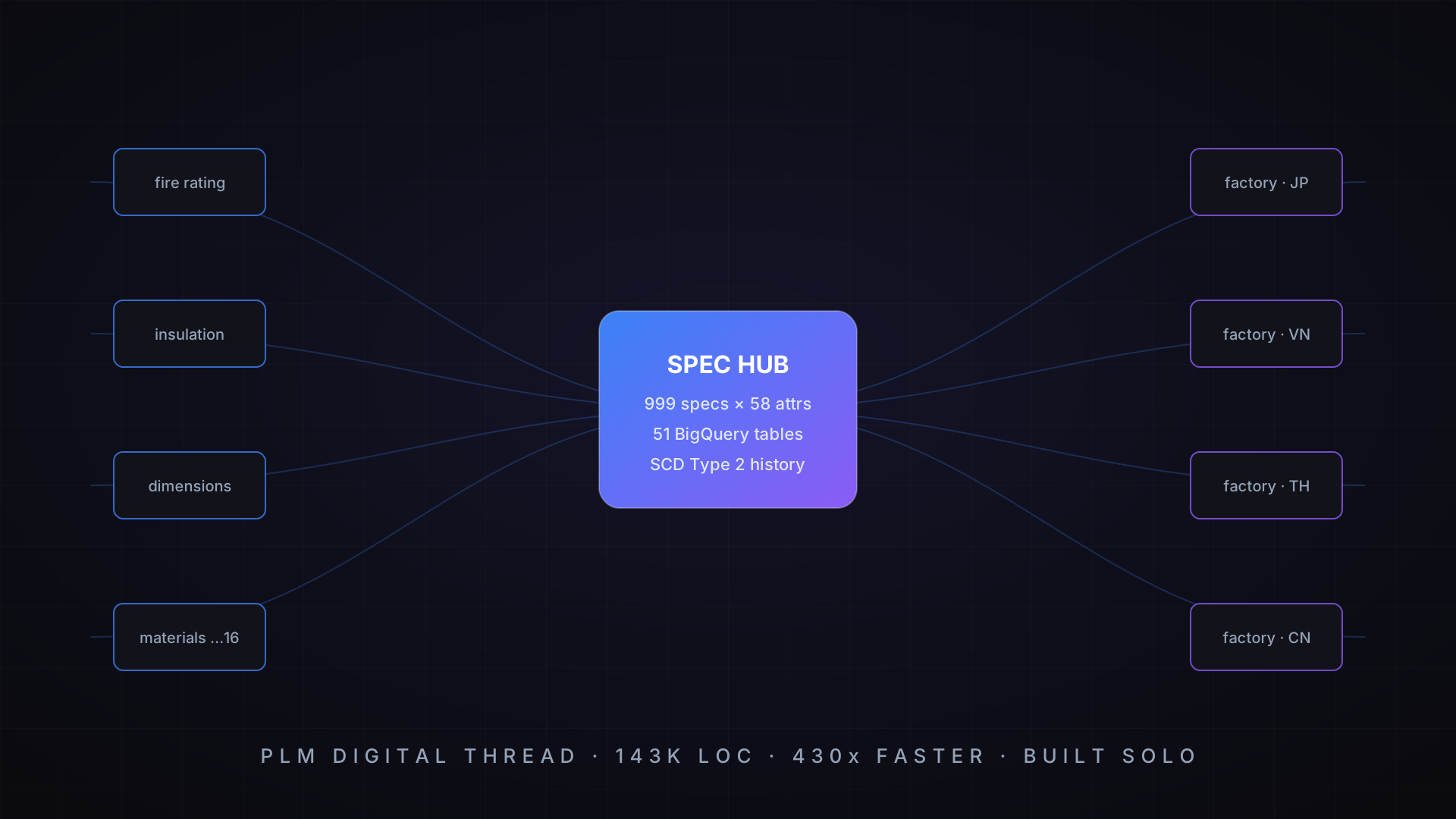
A hub-and-spoke data model: 16 attribute masters normalized around a central specification hub, replacing recursive lookups with O(n+m) joins — the source of the 430x query speedup. Full change history via SCD Type 2 on every master. BOM forward/reverse explosion, 3-way diff, and a constraint-rule engine for valid product variations. The interface stayed in spreadsheets (bidirectional sync with BigQuery), so factory staff needed no new tools. Built test-first: 139 automated tests at 100% pass, and a 5,400-line developer guide so the platform outlives its builder.
Product master data for 999 specifications × 58 attributes lived across scattered spreadsheets, desktop databases, and an aging PLM system. Answering a basic question — 'which products use this part?' — meant opening multiple files and reconciling them by hand. The division needed a single source of truth that four global factories could rely on, with the change history and integrity guarantees that regulated manufacturing demands. Prior attempts had stalled on vendor dependence and unclear requirements — so this time, the prototype had to be built in-house, fast, and to production quality.
A hub-and-spoke data model: 16 attribute masters normalized around a central specification hub, replacing recursive lookups with O(n+m) joins — the source of the 430x query speedup. Full change history via SCD Type 2 on every master. BOM forward/reverse explosion, 3-way diff, and a constraint-rule engine for valid product variations. The interface stayed in spreadsheets (bidirectional sync with BigQuery), so factory staff needed no new tools. Built test-first: 139 automated tests at 100% pass, and a 5,400-line developer guide so the platform outlives its builder.
Build the boring guarantees first: normalization, change history, referential integrity, and tests — the glamour features (variation generation, constraint rules) only matter if the foundation never lies. And meet users where they are: a data platform adopted through the spreadsheets people already trust beats a beautiful app nobody opens.
Product specifications normalized around a single hub — one join path from any attribute to any product, 430x faster than recursive lookups.
Product → parts and part → products in seconds, with multi-condition search and 3-way diff between any two products.
PROHIBITED / REQUIRED / RECOMMENDED rules validate product variation combinations before they reach production.
SCD Type 2 history on every master table — every value answerable with 'who changed it, when, from what'.
Two months of data investigation and architecture design, then 50 days of test-driven implementation: red-green-refactor across 8 test suites, shipping one verified capability at a time. AI-assisted development (as early adopter, 2024–2026) compressed the solo timeline — but every architectural decision, from the hub model to SCD Type 2, is human judgment recorded in the commit history. Finished with handover: a 5,400-line developer guide and a 3-day onboarding path for successors.
Versus the system it replaced
GAS / SQL / Python, built solo
999 specifications × 58 attributes, 4 global factories
Automated tests, all passing (TDD)