Specialized agents
0
Each with a defined role, persona, and mandate
Loading project...
Designer, Governor & Sole Operator
1 human + 12 AI agents
2 years of continuous evolution (predecessor swarm since 2024, current form since 2026)
I don't just use AI — I run an organization of it: 12 specialized AI agents with distinct roles, personas, and rules of engagement, governed by a constitutional rulebook evolved over 30 versions. It handles research, drafting, verification, and operations in my daily strategic-planning work, with 18,000+ actions logged over two years of production use.
A single strategic planner faces unbounded demand: research, analysis, meeting minutes, executive slides, system operations, quality checks. Hiring is not an option. Naive AI usage — one chat window, ad-hoc prompts — doesn't scale either: quality drifts, context evaporates between sessions, and every output still needs full human rework. The real question was organizational, not technical: how do you delegate to AI with the same rigor you would use to run a team of people?
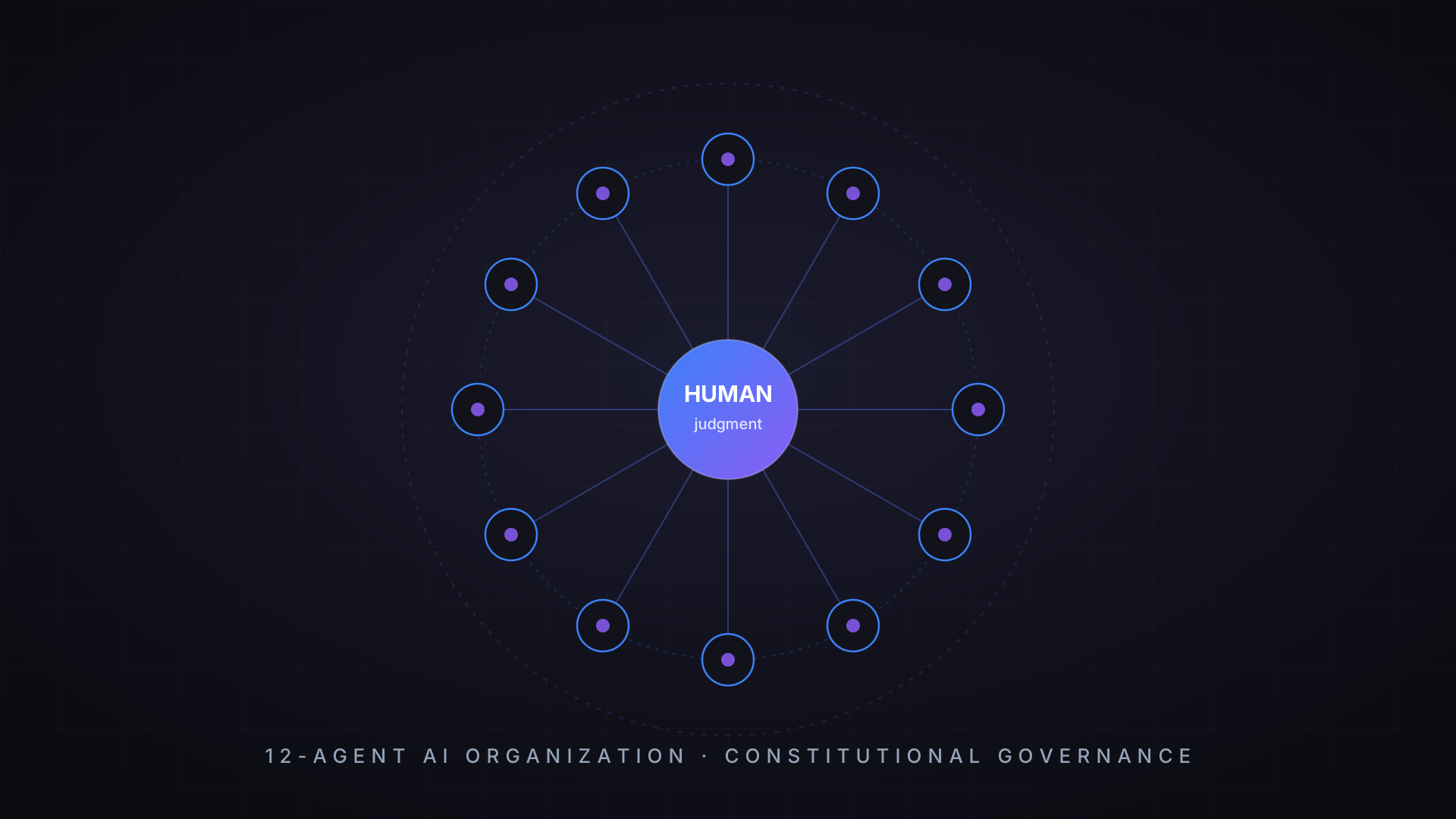
I designed an organization, not a prompt. Twelve agents with defined roles (reviewer, analyst, system operator, UI designer, HR director...), each with a persona grounded in a published methodology, explicit mandates, and forbidden actions. A constitutional rulebook — evolved over 30 versions — defines what agents must never do, who does what, and when work must stop for human judgment. Guardrail hooks block dangerous operations mechanically. Every action is logged; agents get performance reviews; underused agents get 'reassigned'. The human's job narrows to what only humans can do: judgment, alignment, and accountability.
A single strategic planner faces unbounded demand: research, analysis, meeting minutes, executive slides, system operations, quality checks. Hiring is not an option. Naive AI usage — one chat window, ad-hoc prompts — doesn't scale either: quality drifts, context evaporates between sessions, and every output still needs full human rework. The real question was organizational, not technical: how do you delegate to AI with the same rigor you would use to run a team of people?
I designed an organization, not a prompt. Twelve agents with defined roles (reviewer, analyst, system operator, UI designer, HR director...), each with a persona grounded in a published methodology, explicit mandates, and forbidden actions. A constitutional rulebook — evolved over 30 versions — defines what agents must never do, who does what, and when work must stop for human judgment. Guardrail hooks block dangerous operations mechanically. Every action is logged; agents get performance reviews; underused agents get 'reassigned'. The human's job narrows to what only humans can do: judgment, alignment, and accountability.
Rules before capabilities: an AI organization is defined by what it refuses to do. The three-layer decision flow — is it forbidden? who owns it? what does it trigger? — resolves every task before any agent acts. Additions require deletions (one-in, one-out) to keep the rulebook lean. And physical evidence beats plausible claims: no agent reports success without command output to prove it.
A layered rulebook (stop rules → dispatch table → situation triggers) that turns lessons from every incident into institutional memory instead of tribal knowledge.
Agents are 'employees': ad-hoc task agents that prove repeatable value get promoted to permanent roles with resumes; performance is scored from action logs, not impressions.
Pre-execution hooks block destructive commands, protect credentials, and force human sign-off on irreversible operations — safety that doesn't rely on the model behaving.
18,000+ logged actions across two years — who did what, when, with what outcome — enabling delegation-rate tracking and continuous reorganization.
The organization evolved through operation, not upfront design: each failure became a written lesson, each lesson became a rule, and each rule was tested against the next incident. A weekly self-review audits rule freshness, delegation rates, and agent utilization — the organization redesigns itself on a cadence.
Each with a defined role, persona, and mandate
Every incident becomes institutional memory
Two years of observable AI operations
Judgment, people, first-hand information, accountability